
Distilling Missed Samples for Remote Sensing Oriented Object Detectors
Published in IEEE JOURNAL OF SELECTED TOPICS IN APPLIED EARTH OBSERVATIONS AND REMOTE SENSING, 2026
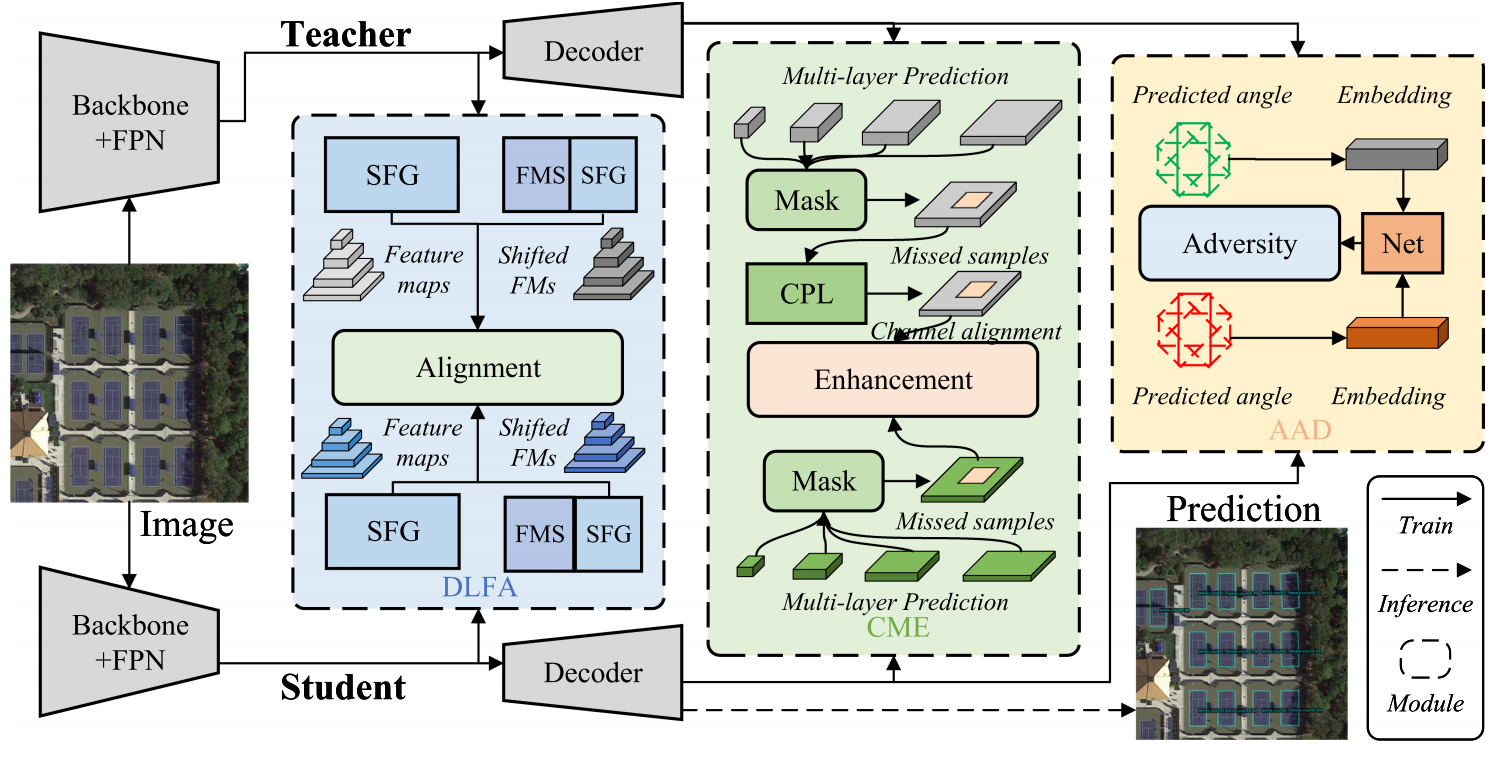 This paper proposes a knowledge distillation method based on missed detection sample enhancement: designing a cross scale missed detection sample enhancement dynamic selection of difficult samples, proposing local feature alignment distillation of key feature distributions, introducing generative adversarial constraint angle prediction, and improving the detection performance of lightweight detectors for multi-scale remote sensing targets in any direction.
Recommended citation:
L. He, P. Chen, B. Dong, Y. Zhang, J. Ni and Z. Zhu (corresponding author), "Distilling Missed Samples for Remote Sensing Oriented Object Detectors," in IEEE Journal of Selected Topics in Applied Earth Observations and Remote Sensing, vol. 19, pp. 9980-9997, 2026, doi: 10.1109/JSTARS.2026.3673759.
Download Paper
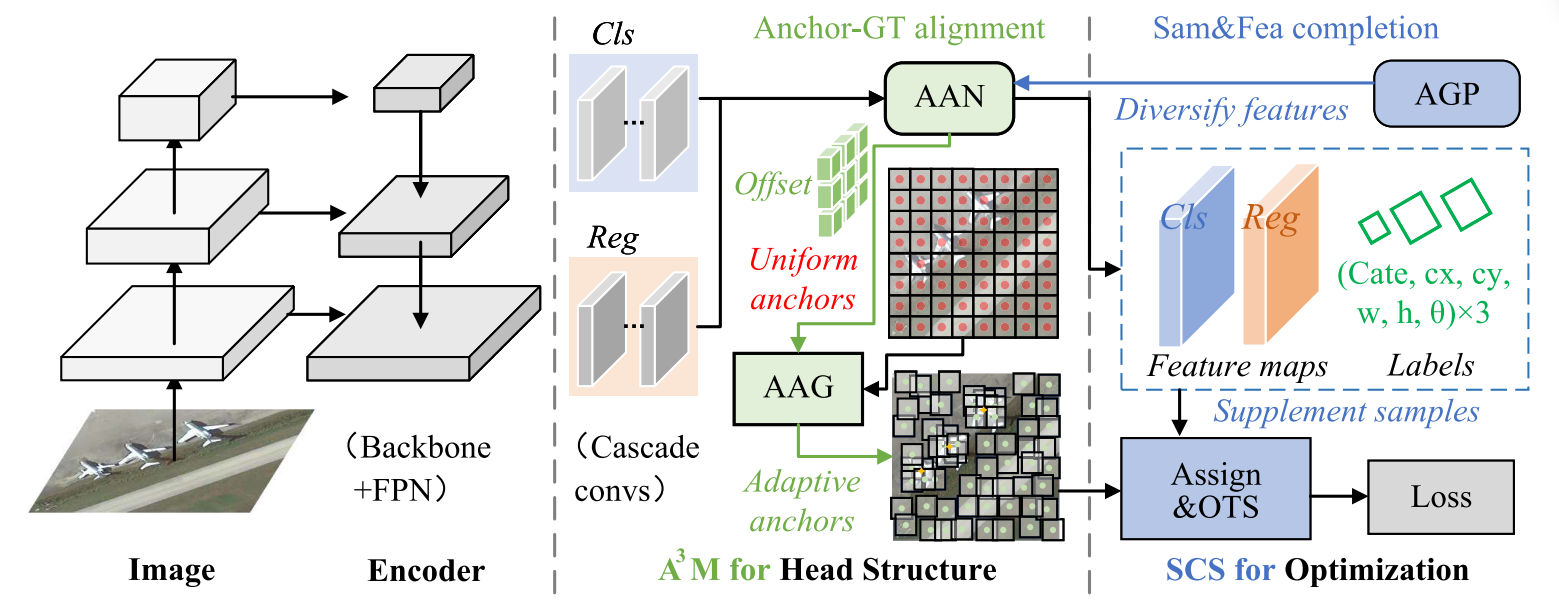 This paper proposes the ACDet rigid object fine-grained detector, which has the following core contributions: 1) adaptive anchor point alignment, decoupling classification centripetal deviation to achieve adaptive alignment; 2) Online tail sample supplementation algorithm to dynamically maintain category balance; 3) Adaptive grouping enhances discriminative features. Achieve SOTA with fewer resources.
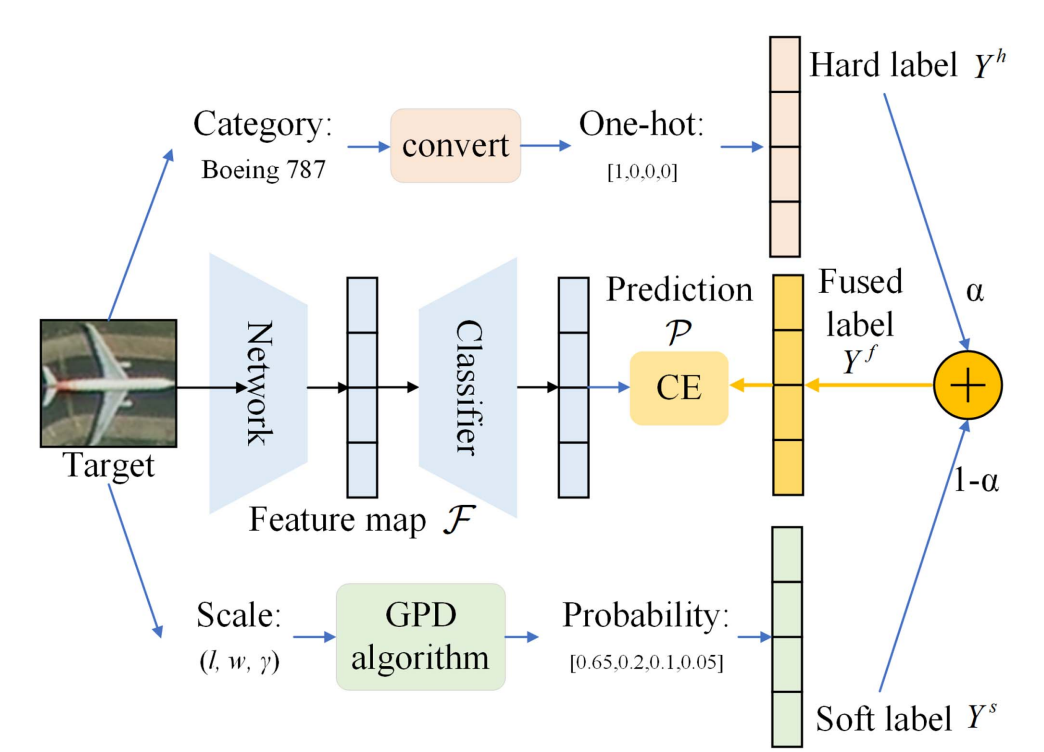 This paper proposes the SD Net training framework: based on probability distribution functions, scale soft labels are constructed to guide learning, and discriminative feature extraction branches are designed for channel and spatial dimensions. On the FAIR1M-OR dataset, adding only a small number of parameters can improve the performance of the baseline model by about 4.6 percentage points.
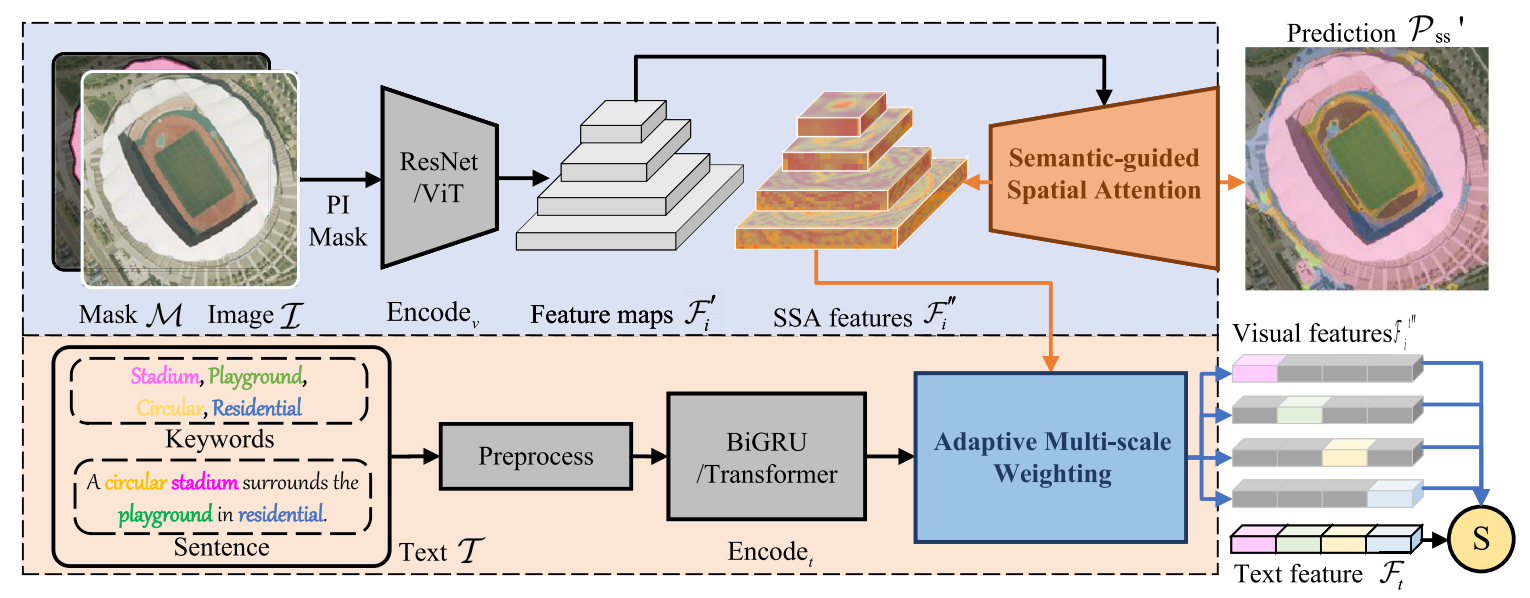 This paper proposes the SIRS cross modal image text retrieval framework, with core contributions including: 1) semantic guided spatial attention, construction of multi task joint learning branches, filtering out noise and refining foreground features; 2) Adaptive multi-scale weighting improves retrieval efficiency. Significant improvement on open-source datasets, with optional output segmentation masks.
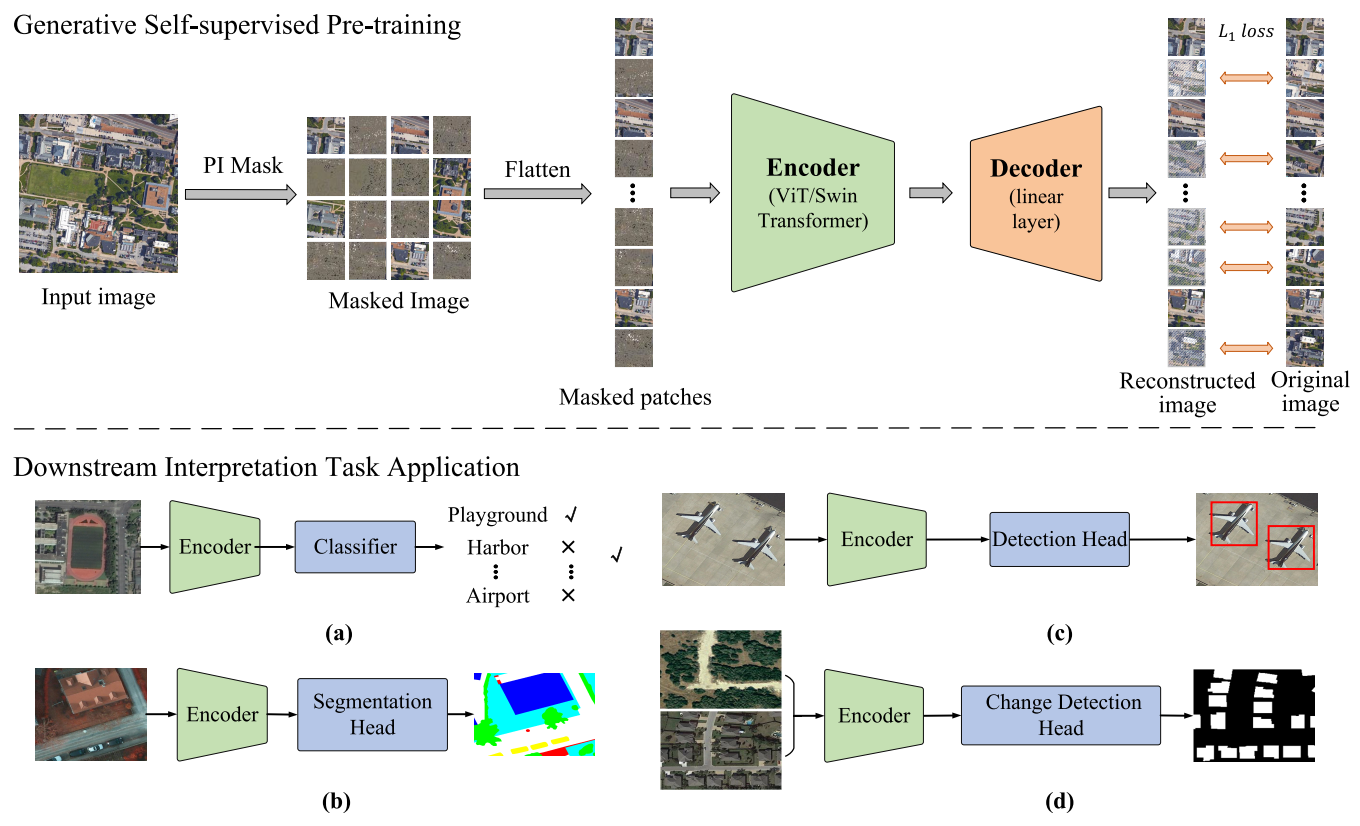 This paper proposes a pre training framework for RingMo remote sensing basic model: for the first time, a pre training method based on mask image reconstruction adapted to remote sensing scenes is proposed. SOTA was achieved on eight mainstream datasets across four downstream tasks, validating the effectiveness of generative self supervised learning in the field of remote sensing.
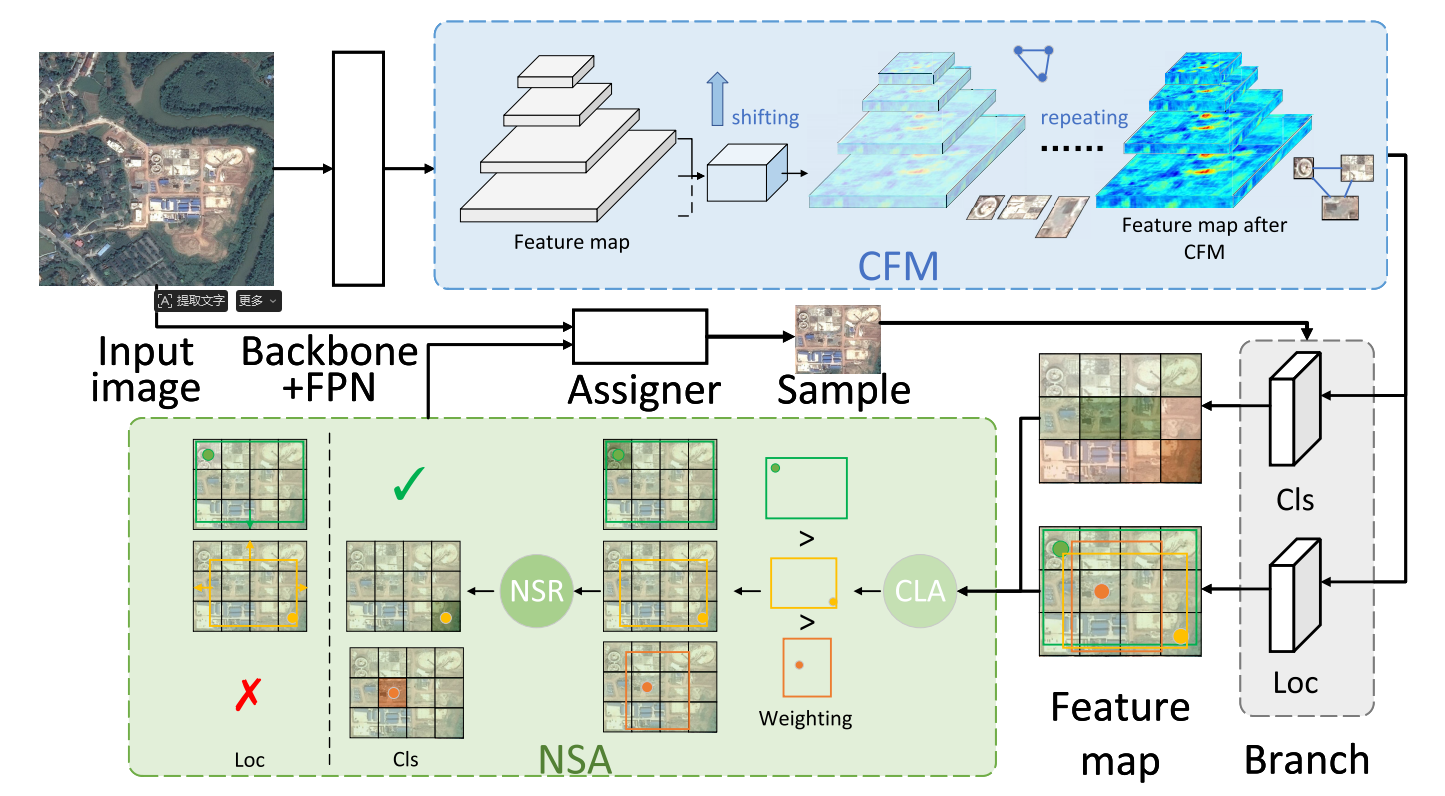 This paper proposes CODet detection of remote sensing combined targets, with core contributions including: 1) cross level feature fusion module learning component structure and positional relationships; 2) The noise sparse sample allocation strategy alleviates the problems of classification localization misalignment and sample imbalance. Build a large-scale remote sensing image inference framework to accelerate inference by 3-4 times.
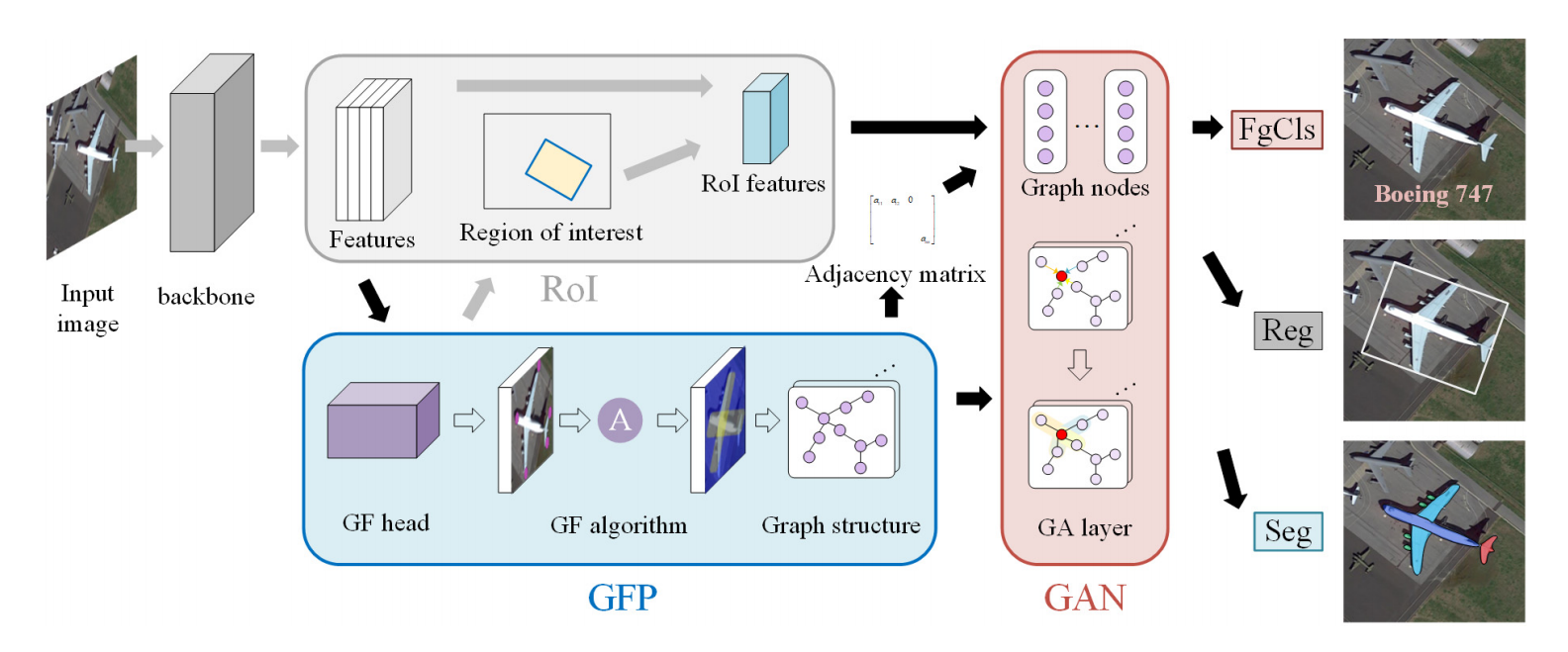 This paper proposes GFA Net, with the core contribution of systematically studying the invariant structural features of remote sensing targets, proposing an implicit modeling of target structural features based on graph convolution in the graph focusing process, and designing a graph aggregation network to achieve end-to-end efficient training. The effectiveness of the SOTA method has been validated on mainstream open-source datasets.
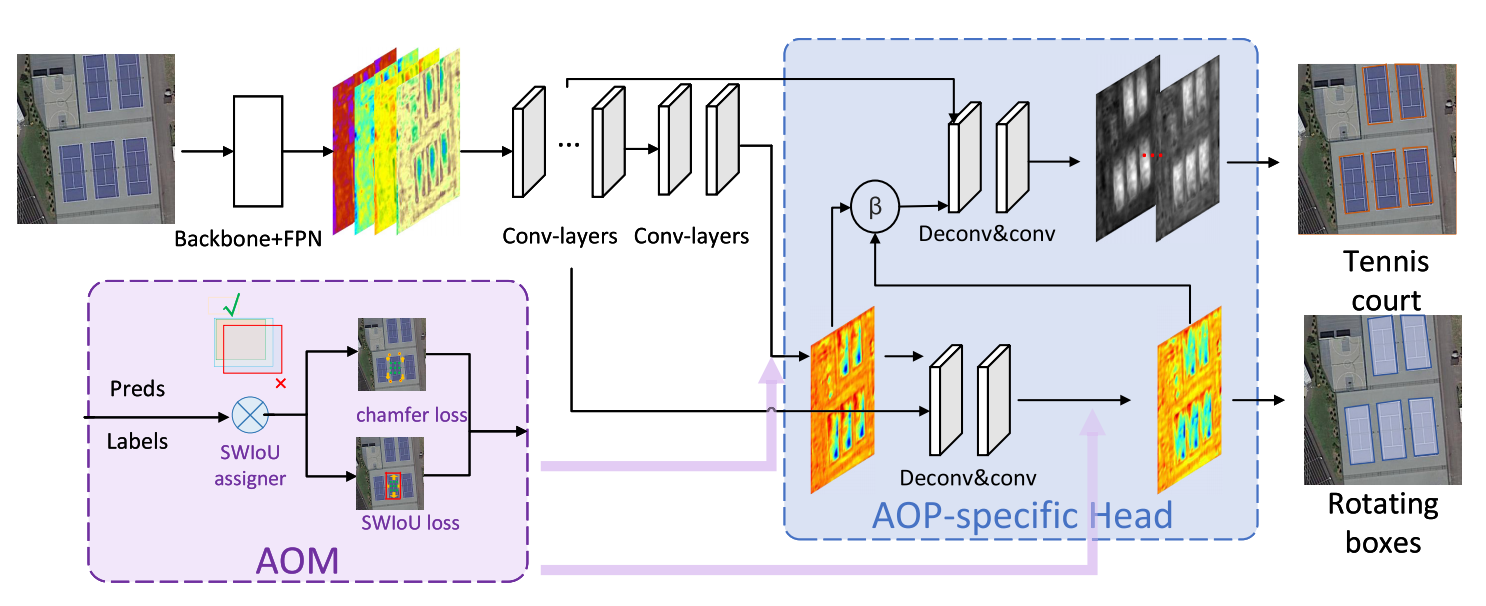 This paper proposes AOPDet, with the core contribution of proposing a non sequential corner representation method as a novel rotation target representation, designing an automatic organization mechanism to guide the model to learn target corners, and designing a dedicated detection head structure. Improved 17.0 mAP compared to baseline on the publicly available aerial dataset, reaching SOTA level.
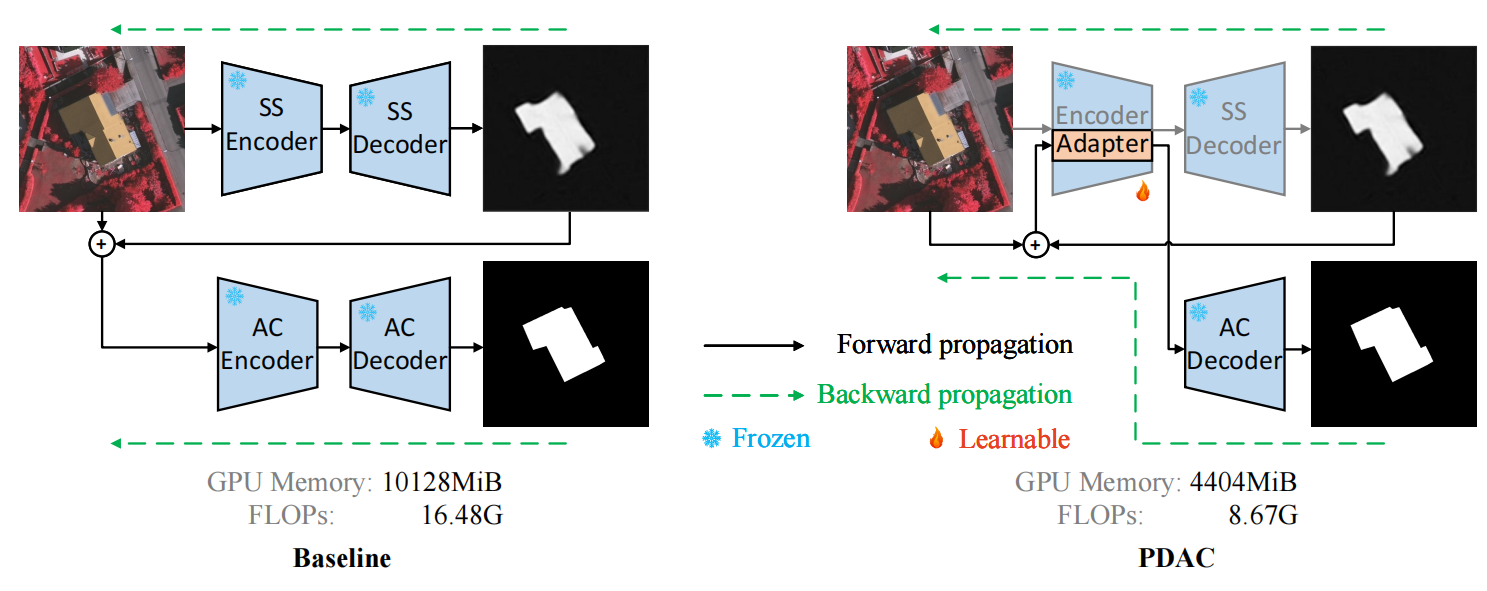 This paper proposes a PDAC network that uses adapter fine-tuning encoders instead of training from scratch, coupling DNN and ACM with a very small number of parameters to achieve end-to-end building segmentation. On two major building datasets, the effectiveness of the parameter efficient fine-tuning method was verified by achieving better performance than the baseline with nearly half of the computing resources.
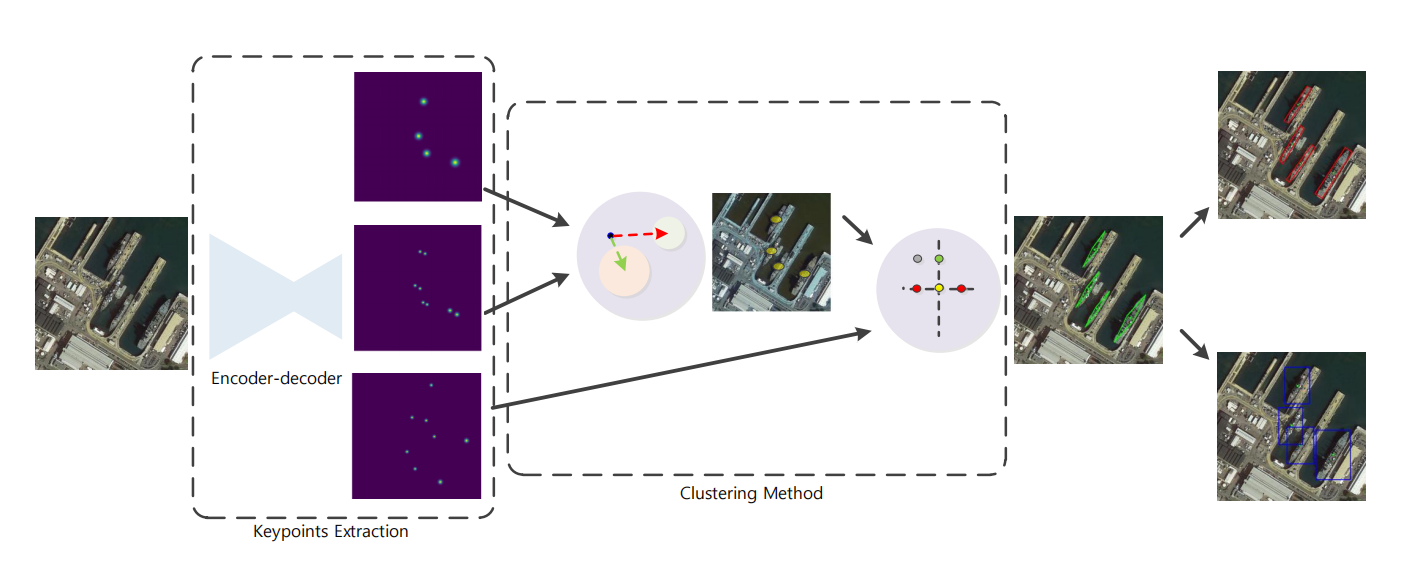 This paper proposes a ship detection framework based on keypoint extraction: the ship is characterized by five keypoints (center, head and tail, left and right midpoints) distributed in a diamond shape, and a clustering algorithm based on geometric features is designed to aggregate the keypoints. Flexible export of horizontal or rotated boxes to achieve SOTA on two datasets.